

Helping Tiny Tuis’ children spread their wings
At Tiny Tuis Early Learning Centre, children build the skills and confidence they need for new experiences and greater independence for entering primary school.
Since opening in 2013, the Mt Wellington centre has grown to support up to 150 children with a team of 37 staff. Children learn in age-based rooms named after New Zealand native birds.
“We value that each age group has different needs,” says Nicole Sharpe, Centre Manager at Tiny Tuis.
Tiny Tuis’ philosophy: respectful and peaceful
Tiny Tuis’ philosophy is inspired by the Emmi Pikler model where teachers focus on 'doing with, not to.’
“I believe children are at the heart of what we do and we should follow their lead. They will get there when they are ready,” says Nicole.
Mealtimes follow the same philosophy. “We encourage children to try foods, but we don’t force them. We find children are more willing to try when we are respectful, offer gentle encouragement and role model positive eating,” says Nicole.
Children enjoy a nourishing hot lunch prepared daily by the centre’s long-serving chef, Lita Salamanca.
In the Kākāriki Room (three- to four-year-olds), lunchtime excitement builds as teachers describe the smells coming from the kitchen.
Weaving culture and kai into learning
Tiny Tuis celebrates the many cultures within their centre’s community.
“We often encourage teachers to share their culture with children during our centre celebrations,” says Nicole.
Upcoming cultural celebrations include Diwali and Loy Krathong, giving children opportunities to experience different traditions, languages and food.
Creativity is also encouraged. When the centre’s mud kitchen was built, staff reimagined it into a café where children explored literacy and numeracy through play alongside their families.
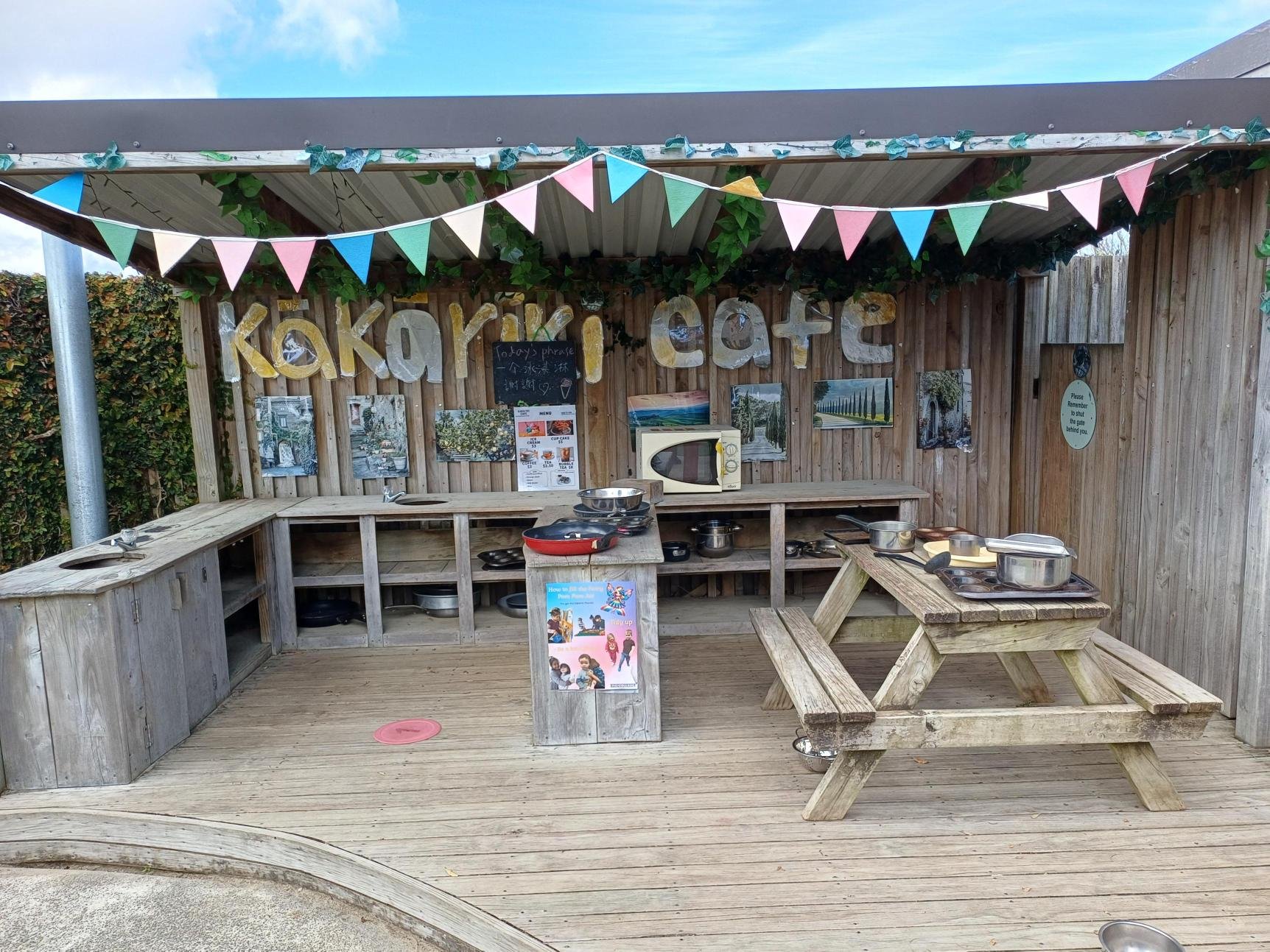
Photo caption: The mud kitchen reimagined as a café.
Language weeks and cultural celebrations are woven into learning year-round.
In the past, each room explored a Pacific nation. Each month they learned a new part of the culture whether it was a language, dance, song, or food.
“This helped children engage deeper into language weeks and share what they’ve already learned throughout the year,” says Nicole.
Transitioning from centre to school
By the time children reach the Kōtare Room (four- to five-year-olds), school transition becomes a clear focus.
Children’s photos are displayed next to the primary schools they will attend, helping them prepare for their next adventure.
“Tiny Tuis is regularly in touch with feeder (primary) schools at least once a term,” says Nicole.
To prepare for primary school, the children practise routines.
“Children are involved in setting up the food. We have roles to give them responsibility and independence for when they transition to school,” explains Nicole.
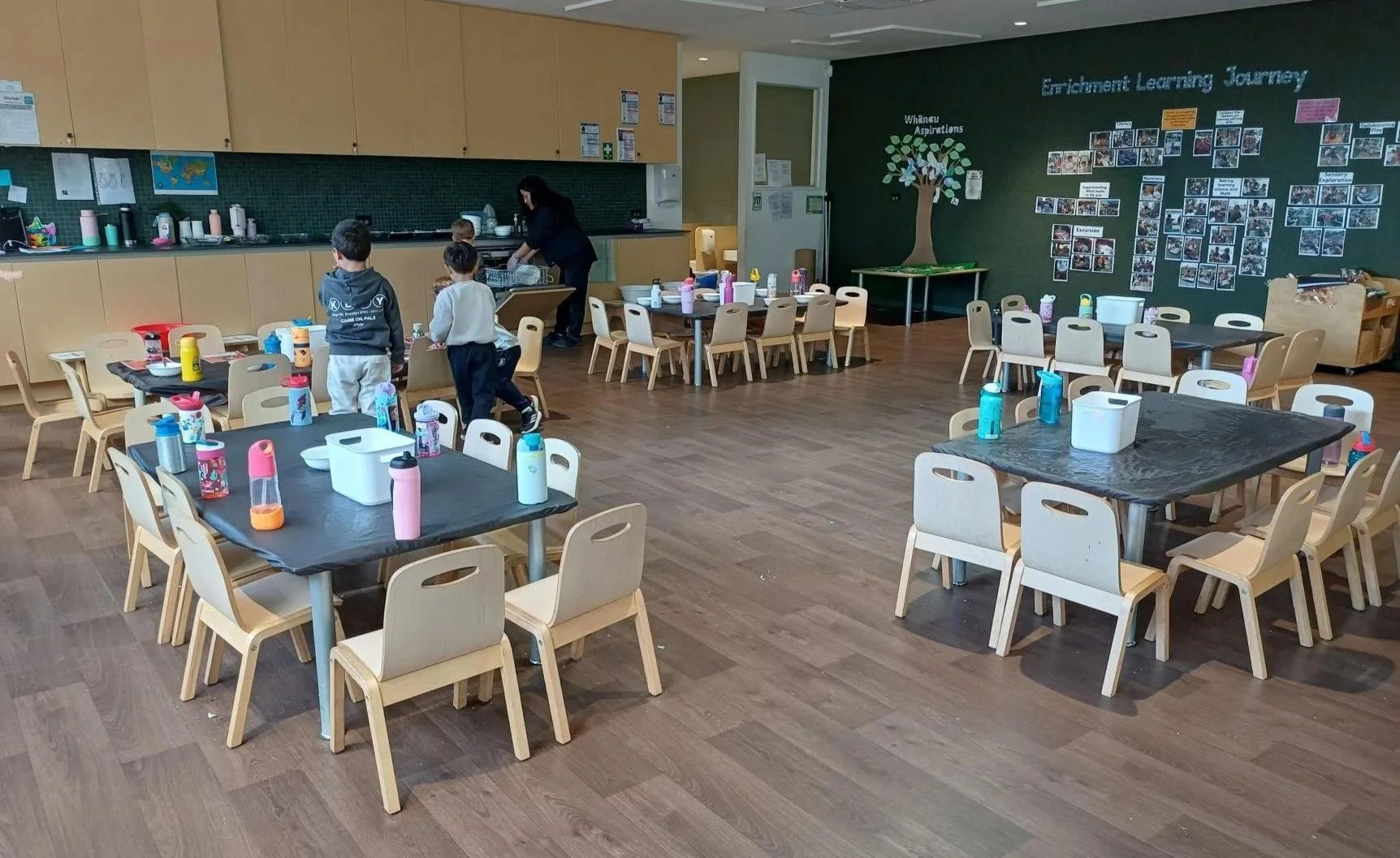
Photo caption: Children practising routines like setting up drink bottles for lunchtime to prepare for primary school.
Once a month, children take part in a lunchbox day. In the leadup to the day, children are involved in preparing food.
“On lunchbox day, children bring an empty lunchbox and pack what [food] they want and how much they want,” says Nicole.
At the end of their time at Tiny Tuis, children celebrate their journey at a graduation ceremony. They wear the centre’s kōrowai while other kids sing a waiata gifted by the centre’s founding whānau.
These milestones, along with children’s everyday learning, are shared with whānau through the Storypark app.
“Parents love seeing photos and we encourage families to communicate with teachers on their [Storypark],” says Nicole. “It’s all part of creating a warm environment.”
As children spread their wings and prepare for school, Tiny Tuis aims to ensure they leave as confident, competent and respectful learners who have a strong sense of who they are.
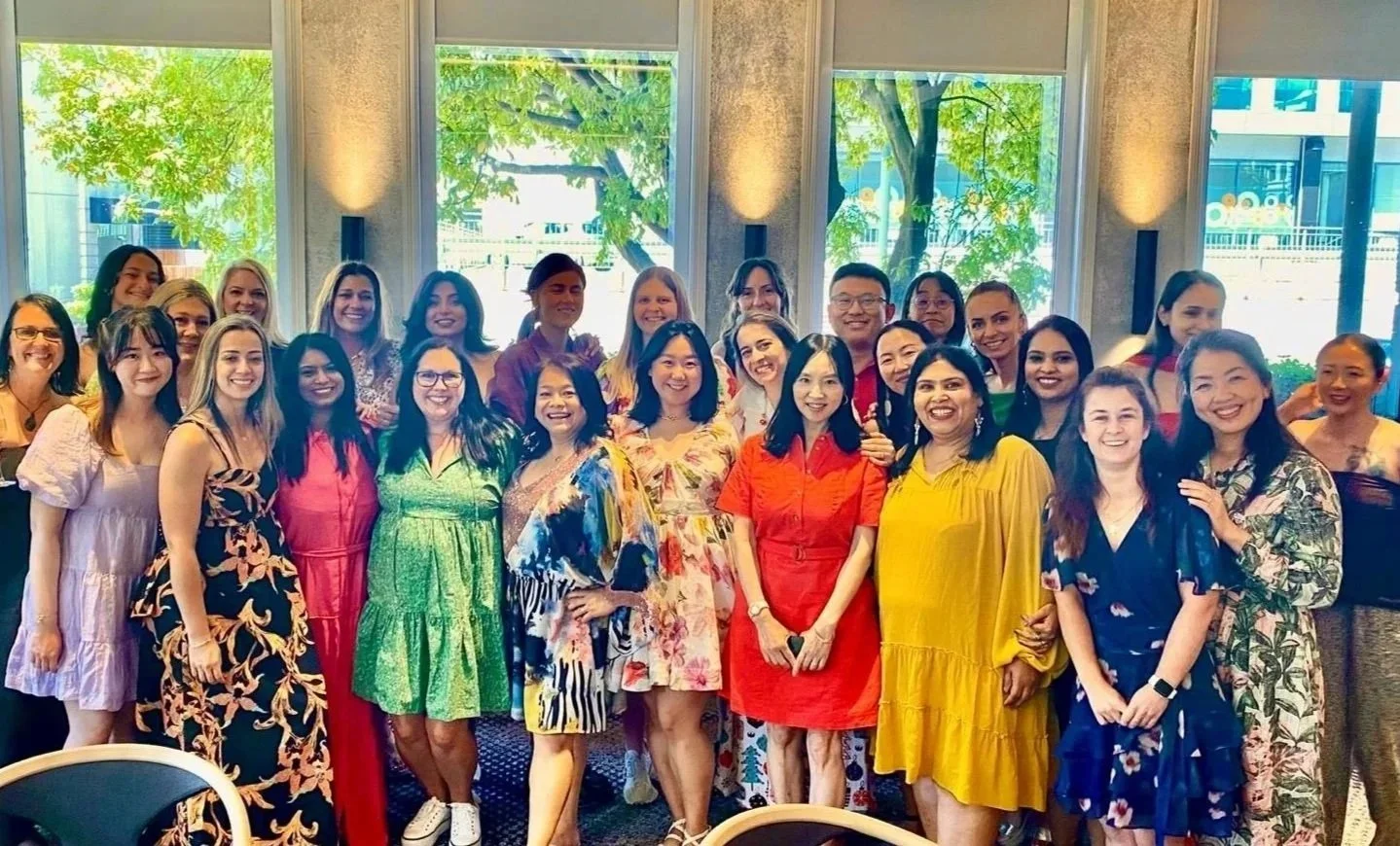
Photo caption: Staff from Tiny Tuis Early Learning Centre.